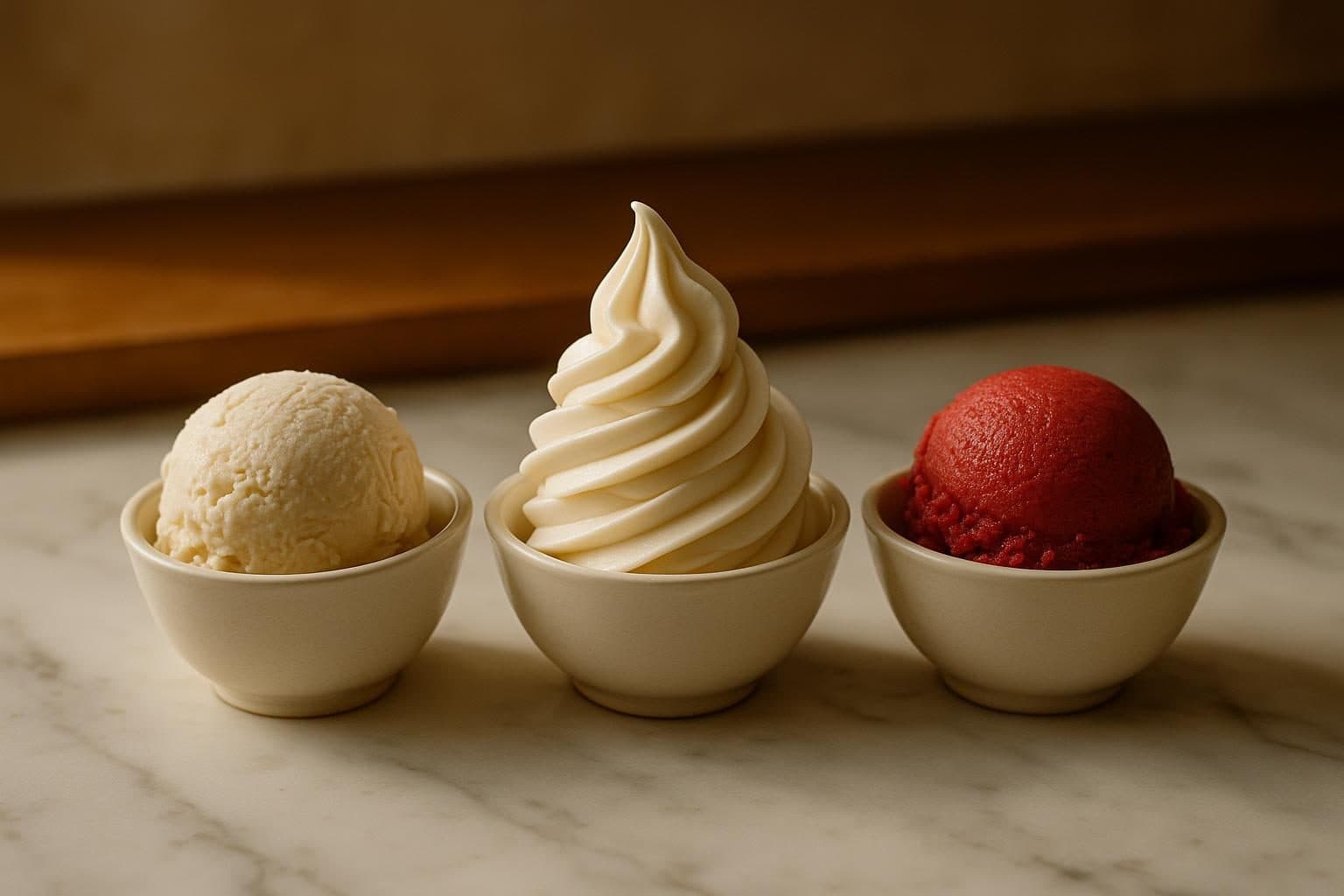
Why gelato is creamier than ice cream, what sorbet really is, and how to choose the right frozen treat — a clear, simple guide from the makers at Amore Gelati.
In short: three different desserts
Gelato, ice cream and sorbet often sit side by side in the display, but they are three different things. The difference isn't marketing — it's in the ingredients, the amount of air and the serving temperature. Those three factors are exactly why a good gelato melts silkily on the tongue while industrial ice cream stays hard and cold.
If we had to say it in one sentence: gelato is denser and more aromatic, ice cream is richer in cream and more aerated, and sorbet contains no milk at all — it's pure fruit.
Fat: why gelato feels 'lighter'
Classic ice cream is made mostly with cream and often egg yolks, which gives it 10–16% fat. Gelato relies on whole milk and less cream, so its fat content is usually between 4 and 8%.
Lower fat means the fat doesn't coat the tongue, so flavours come through more clearly and intensely. That's why a good pistachio or lemon gelato tastes so clean and direct.
Air and texture: the secret is in the churn
Ice cream is churned fast to whip in more air — sometimes up to 50% of its volume. That air makes it fluffy and light, but also dilutes the flavour. Gelato is churned slowly and takes in far less air (around 25–30%), which is why it's dense, smooth and concentrated.
That density is the difference you feel with the very first spoonful — gelato is 'fuller' in the mouth without being heavy.
Temperature: why gelato melts more softly
Ice cream is served quite frozen. Gelato is kept a few degrees warmer, which makes it soft and pliable straight from the case. The warmer temperature also 'releases' the aromas — your tongue isn't numbed by the cold and can pick up the finer notes of flavour.
It's also why real gelato can't sit for weeks — it's made to be eaten fresh, not stored for a long time.
And sorbet? Pure fruit, no milk
Sorbet is an entirely different category: no milk, no cream. It's made from fruit purée, water and sugar, sometimes with a touch of lemon for balance. The result is refreshing, intensely fruity and naturally vegan.
That makes sorbet a favourite on hot days and a great option for anyone avoiding dairy. At Amore Gelati we make seasonal sorbets from real fruit — no colourings and no palm oil.
How to choose?
If you want a concentrated, silky flavour that melts slowly, choose gelato. If you're after a classic, creamier and more aerated texture, ice cream is for you. And if you're craving something refreshing, fruity and dairy-free, sorbet is the answer.
The best way to feel the difference is to taste all three side by side. Drop into one of our Sofia locations and ask our team — we'd be glad to let you try.
- Is gelato healthier than ice cream?
- Gelato usually has less fat than ice cream because it's made mostly with milk rather than cream. That doesn't make it 'diet', but it often feels lighter. What matters most is ingredient quality — which is why we use no palm oil and no pre-mixes.
- Why does gelato melt faster?
- Because it's served a little warmer and contains less air. That's a good sign of fresh, artisan gelato — it's meant to be eaten right away, not kept frozen for a long time.
- Is sorbet vegan?
- Yes — classic sorbet is made from fruit, water and sugar, with no dairy at all. Our seasonal sorbets are naturally vegan and free of colourings.