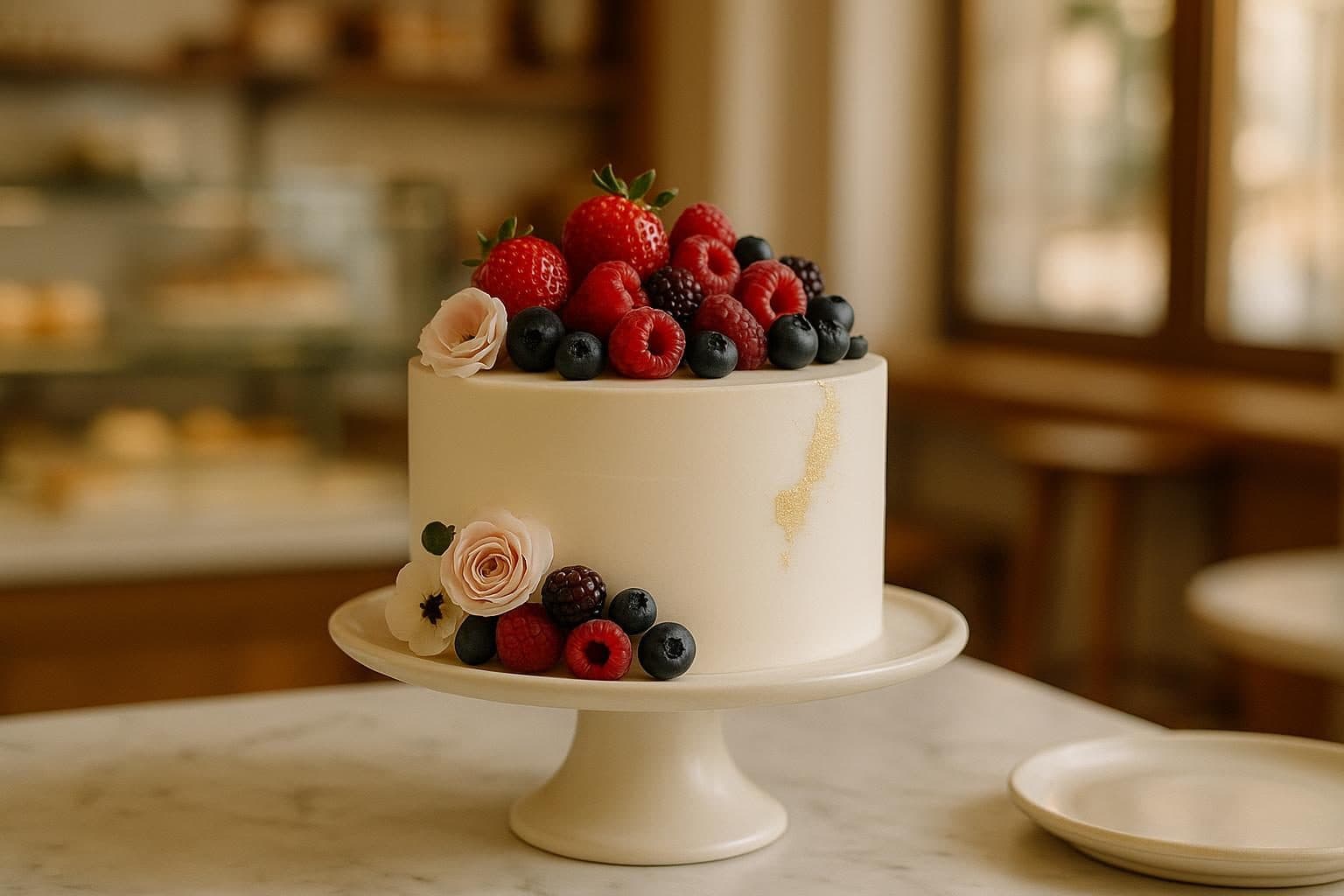
Who hasn't had to justify a slice of birthday cake? We believe there's a better way — and it's called balance.
Who hasn't had to hide whether they're eating something or not? To justify a slice of cake at a friend's birthday? To count calories in their head at dinner? We believe there's a better way. And it's called balance.
Where food guilt comes from
Ever since we were small, we've been told what to eat and what not to. Sugar is bad. Fat is dangerous. Carbs should be limited. Chocolate is a sin. Cake is for special occasions. Ice cream is an indulgence.
And so, without noticing, we grow into adults with a long list of 'forbidden' foods, a sense of guilt at every deviation from the rules, and a relationship with food that is anxious rather than joyful.
Diet fads don't help. Every decade arrives with a new truth: once fat is the enemy, then carbs, then sugar, then gluten. Each new fashion cancels the last and adds another layer of confusion. There is no fashion in eating — there is only one body, yours, and it needs attention, not rules.
The brain and body need everything
Science is clear on one point: the body needs variety. Not perfection. Not asceticism. Not the exclusion of whole food groups. Variety.
| Nutrient | Why it's needed | If you restrict it too much… |
|---|---|---|
| Sugars & carbohydrates | The main fuel for the brain and muscles | Fatigue, irritability, poor concentration |
| Fats | Hormones, nervous system, vitamin absorption | Hormonal imbalance, dry skin, low mood |
| Proteins | Building cells, the immune system | Loss of muscle mass, weakened immunity |
| Vitamins & minerals | Hundreds of biochemical processes in cells | Depends on the vitamin — but the consequences are real |
| Pleasure from food | Releases endorphins, lowers stress | Anxiety around food, a diminished life |
The brain and sugar — the honest story
The brain is the most energy-hungry organ in the body — it consumes about 20% of all calories, almost exclusively as glucose. When blood sugar drops sharply, the brain feels it at once: fatigue, difficulty concentrating, irritability.
The problem was never sugar in itself. The problem is the amount, the frequency and the quality. A piece of high-quality chocolate or a spoon of artisan gelato is not the same as a litre of fizzy drink. Biochemically, nutritionally and in flavour — they are different worlds.
Restriction vs balance — two different worlds
Restriction and balance look similar from the outside — both involve attention to what we eat. But on the inside they are fundamentally different.
| The world of restriction | The world of balance |
|---|---|
| Foods are 'good' or 'bad' | Foods are simply foods — context matters |
| A slip leads to guilt | A choice leads to awareness |
| The focus is on the forbidden | The focus is on variety |
| The body is an enemy to be controlled | The body is a partner to be listened to |
| Pleasure is suspect | Pleasure is a signal, not a sin |
| Eating is a task | Eating is a ritual |
| Result: stress, swings, fatigue | Result: resilience, satisfaction, health |
Why restriction doesn't work long-term
The psychology of prohibition is well studied. When we declare a food 'forbidden', the brain wants it more. The phenomenon is known as the 'white bear effect' — the harder you try not to think of the white bear, the more you think of it.
Strict restrictions lead to cycles: a period of abstinence, followed by overeating the very food that was banned, followed by guilt, followed by new abstinence. The medical literature calls it the 'restrictive eating cycle' — and it is more harmful to health than moderate consumption of any food. The forbidden doesn't disappear from our desires — it only builds charge.
Informed choice — the key to health
The difference between restriction and balance is the difference between fear and knowledge. Restriction comes from fear — of fat, of sugar, of calories. Balance comes from knowledge — of what our body does with different foods, and when and how much of them serves us well. Informed choice doesn't mean knowing the calories of every food. It means understanding the principles — and then trusting yourself.
| Principle | What it means in practice |
|---|---|
| Variety beats perfection | No single food is enough and no single food is a catastrophe. The body needs a broad spectrum of nutrients. |
| Quality beats quantity | A little high-quality chocolate is different from a lot of industrial chocolate. The body feels the difference and you're satisfied with less. |
| Context matters | A birthday cake is not the same as an everyday snack. Awareness of the situation matters more than the particular food. |
| Listen to the body, not the rules | Hunger, fullness, the craving for something sweet — these are all signals. The task is to learn to listen to them. |
| Pleasure is health | Eating with pleasure, without anxiety, is linked to better health. A smile at the table is a nutrient. |
Our place in this story
We make gelato, cakes and chocolate bonbons. We know these products aren't everyday food, and we don't claim they are. But we believe they have their place in a balanced life — and not as an exception, a sin or a weakness. They are moments. The moment with a child in the garden, on the square. The conversation with a friend over a slice of cake. The small personal pleasure at the end of a busy day.
If you're going to eat something sweet — and we believe you sometimes should — let it be made from real ingredients. Butter, not palm oil. Fresh fruit, not concentrates. Real chocolate, not imitation. Quality sweets aren't 'healthy' — they are the better choice within their category, and that difference matters.
What balance looks like in practice
Balance is not a formula. It's not the 80/20 rule, not intermittent fasting, not any of the thousands of diet systems. Balance is personal — built from your needs, rhythm, pleasures and values. But a few practical questions can help:
- Am I eating with enough variety — different colours, groups and flavours?
- Am I eating with attention, or automatically in front of a screen?
- Do I like what I'm eating? Pleasure is an indicator, not a sin.
- Do I feel good after eating? The body gives feedback.
- Do I carry guilt around food? If so — perhaps the restrictions are too strict.
- Do I allow myself the special moments without justification?
We don't tell you what to eat — no one should. If you choose a slice of cake, eat it with pleasure, not guilt. If you choose gelato, enjoy every scoop. Health isn't only in what we eat — it's also in how we eat, in the people we share food with, and in the smile we finish a meal with.
- Does balance mean I can eat whatever I want?
- Balance isn't a lack of attention — it's mindful attention without guilt. Variety, quality and context matter. A slice of quality cake on a special occasion fits beautifully into a balanced life.
- Is sugar bad?
- The problem isn't sugar in itself, but the amount, frequency and quality. A little quality dessert is biochemically different from a litre of fizzy drink.
- Why do strict diets often fail?
- Because prohibition intensifies craving (the 'white bear effect') and leads to a cycle of abstinence and overeating. Moderation is more sustainable than strict restriction.